Your Face, Your Rules: The Exhausting Double Standard of Beauty Choices Nobody Asked For
Let's be honest for a second. You've probably felt it — that tiny internal justification you run through before leaving the house. Is this too much? Will people think I'm trying too hard? Or not hard enough? Maybe you toned down your eyeshadow for a work meeting. Maybe you felt weirdly self-conscious walking into a coffee shop bare-faced on a Saturday. Maybe you've caught yourself explaining your no-makeup look to a coworker who didn't even ask.
Welcome to the makeup guilt trap. Population: basically everyone with a face.
Here in Brooklyn, we like to think we're past all that. And in a lot of ways, we are. Walk down Flatbush Avenue on a Tuesday morning and you'll see every possible expression of beauty — bold lip, no lip, full beat, bare skin, lash extensions, natural brows, glitter at 9 a.m. (no judgment, honestly). The borough has always been a place where aesthetic diversity isn't a trend. It's just Tuesday.
But even here, even in one of the most visually expressive cities in the world, the pressure to justify your beauty choices hasn't fully gone away. It's just gotten more complicated.
When "Empowerment" Becomes Another Box to Check
Somewhere in the last decade, beauty culture split into two loudly opposing camps. On one side: the maximalists, the full-glam devotees, the people who will contour their way through a pandemic because it makes them feel good. On the other: the "no-makeup makeup" crowd, the skin-first minimalists, the ones who've made a whole personality out of their 3-step routine.
Both sides have been sold a version of empowerment. And both sides, weirdly, have also been shamed.
Wear a lot of makeup? You're hiding something. Insecure. Performing femininity for the male gaze. Wear no makeup? You're making a statement. Trying to seem effortlessly superior. Or you've "let yourself go."
The absurdity is almost funny — until you realize how deeply these narratives actually live in our heads. The beauty industry profits from both directions, selling us the idea that how we wear makeup says something fundamental about who we are. And social media has turbocharged all of it, turning every aesthetic choice into a potential identity claim.
The Performative Minimalism Problem
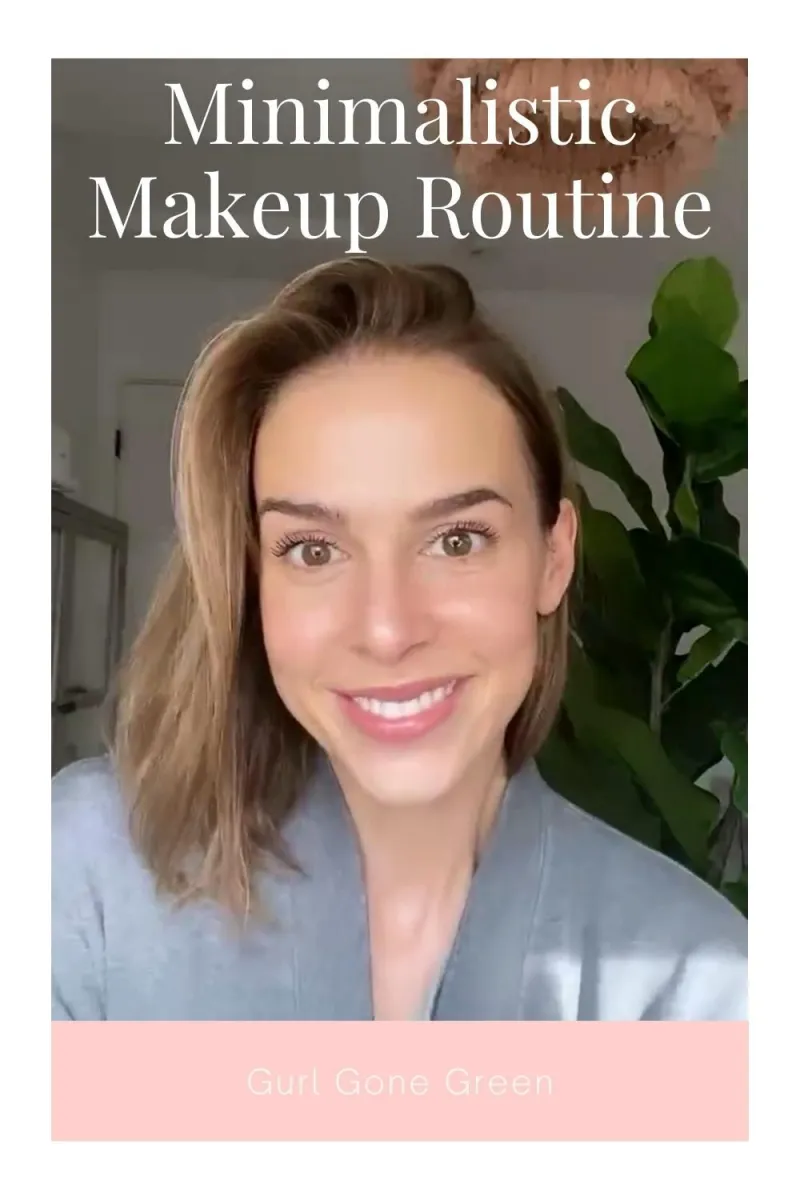
There's a specific flavor of this that's worth calling out: performative minimalism. You know the vibe. The carefully curated "I woke up like this" post that took 45 minutes and three ring lights to achieve. The influencer who announces their "bare face" while wearing skin-blurring primer, brow gel, and a lip treatment with a suspiciously rosy tint.
Now look — we're not here to police anyone's routine. If you want to wear all of that and call it bare, that's genuinely your business. The problem isn't the products. The problem is the message embedded in the aesthetic: that looking effortless is morally superior to looking like you tried.
This creates a weird hierarchy where effort itself becomes something to hide, and where women who openly enjoy makeup get quietly coded as vain or shallow. It's a new version of a very old judgment, just dressed up in dewy skin and a diffused blush.
Brooklyn Taught Me to Mind My Business (And My Own Face)
What I love about this borough — genuinely — is that it has always made space for contradiction. You can live next door to someone whose beauty routine is a 12-step K-beauty situation and someone else who hasn't thought about skincare since high school, and both of them can be completely valid, interesting, fully realized people.
That kind of visual diversity is normalizing in the best way. When you're surrounded by people who make wildly different aesthetic choices without apparent anxiety about it, you start to internalize the idea that maybe your face doesn't owe anyone an explanation.
I talked to a few people around the neighborhood about this. Dara, a 31-year-old graphic designer from Crown Heights, told me she used to feel like she had to justify her full-glam looks to her coworkers. "I'd come in with a bold eye and immediately preface it with 'I had a thing last night,' like I needed an excuse," she said. "I don't do that anymore. I just... wore the eye. And nothing happened. Nobody cared as much as I thought they did."
That's the thing, isn't it? A lot of the justification we perform is for an audience that's mostly in our own heads.
How to Actually Move Past the Guilt
So what does it look like to genuinely opt out of this cycle? A few things that have actually helped — not as prescriptions, just as ideas worth considering.
Notice the internal monologue. Before you explain your makeup choices to someone who didn't ask, pause. Where did the urge to justify come from? Is it habit? Anxiety? A specific person's imagined reaction? Naming it doesn't make it disappear, but it helps you see it for what it is.
Separate what you enjoy from what you think you're supposed to enjoy. Do you actually like a full face of makeup, or do you like the feeling of being perceived as someone who has it together? Do you actually prefer going bare, or does it feel like the "smarter" choice? Neither answer is wrong. But knowing the difference is useful.
Stop crowdsourcing your reflection. Social media is a terrible mirror. The algorithm rewards extremes — extreme glam, extreme minimalism, extreme transformation. Real life is messier and more interesting than that. Your actual face, in actual lighting, doing whatever feels good on a given Wednesday, doesn't need to perform for anyone.
Give other people's choices the same grace you want for yours. This one's harder than it sounds. But the moment you stop internally critiquing the woman at the gym who showed up with a full beat, or rolling your eyes at someone's bare-faced "authenticity" content, you start to loosen the grip those judgments have on your own choices.
The Bottom Line
Your beauty routine — whether it takes 90 minutes or 90 seconds — is not a political manifesto. It doesn't have to mean anything beyond what it means to you. The pressure to make it mean something, to align it with a value system, to wear your self-worth on your face in a legible way — that's a construct. A profitable one, but a construct nonetheless.
Brooklyn, at its best, has always known this. The beauty of this place is that there's room for all of it — the bold, the bare, the somewhere-in-between. The goal isn't to perform authenticity. It's to actually have some.
So wear the red lip. Or don't. Either way, you don't owe anyone a reason.