Your 'Self-Care' Routine Is Stressing You Out — Here's How to Actually Rest
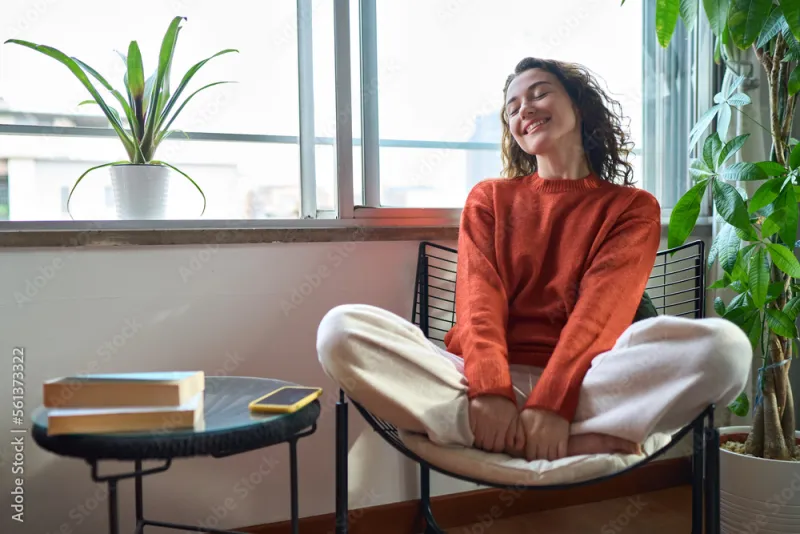
Photo: millennial woman relaxing Brooklyn apartment cozy self care no phone resting, via as2.ftcdn.net
Let me paint you a picture. It's Sunday morning. You slept in until 8am because you actually needed sleep. But instead of feeling rested, you're already doing math in your head: If I skip the gym, I can still do the meditation app, but then I won't have time for meal prep, and if I don't meal prep, the whole week falls apart, and if the whole week falls apart—
Welcome to wellness burnout. Population: most millennials I know.
Somewhere between the rise of Instagram wellness influencers and the $4.5 trillion global wellness industry, "self-care" quietly stopped being about rest and started being about optimization. And if you're living in a city like Brooklyn — already navigating rent that makes your eyes water, a job market that rewards constant hustle, and a social landscape that can feel relentlessly performative — the pressure to also maintain a perfect wellness routine can tip from aspirational into genuinely exhausting.
I've been thinking about this a lot lately. And I'm not alone.
The Wellness Industrial Complex Is Not Your Friend
Here's something the $90 adaptogen powder doesn't want you to know: a significant chunk of the wellness industry is built on the same psychological mechanisms as the diet culture it claims to oppose. It sells you a vision of your best, most optimized self — glowing skin, balanced cortisol, a gut microbiome that practically hums — and then implies, gently but persistently, that you're not quite there yet. But you could be, if you just added this one supplement, this one practice, this one $200 monthly subscription box.
"I realized I was spending more time researching wellness products than actually resting," says Maya, a 31-year-old graphic designer from Bed-Stuy. "I had a whole spreadsheet of supplements I was taking. A spreadsheet. For relaxing."
Maya's story isn't unusual. Among the Brooklyn residents I spoke to for this piece, a recurring theme emerged: the wellness routine had become another performance, another metric to hit, another way to feel behind.
And the irony is brutal. The cortisol spike from guilt-spiraling about missing your morning routine is, physiologically speaking, not that different from the cortisol spike you were trying to manage in the first place.
Let's Talk About the Trends That Aren't Helping
The 5am wake-up gospel. Look, some people are naturally early risers and genuinely thrive on a 5am start. But the wellness content machine has turned this into a moral virtue, implying that people who sleep until 7am are somehow lazier or less disciplined. Sleep science is pretty clear on this: most adults need 7-9 hours, and chronotypes — your body's natural sleep-wake preference — are largely genetic. Forcing yourself to wake up two hours earlier than your body wants to isn't discipline. It's sleep deprivation with better branding.
The supplement spiral. Magnesium, ashwagandha, lion's mane, collagen peptides, NAD+, berberine — the list grows every six months, and so does the price tag. Some of these supplements have solid research behind them. Many don't, or the research is far too preliminary to justify the cost. Before you add anything to your routine, it's worth asking: is this addressing an actual deficiency, or am I just anxious and a podcast told me this would help?
Wellness as aesthetic. The Stanley cup. The matching workout set. The "that girl" morning routine filmed in a spotless apartment with perfect lighting. There's nothing wrong with liking nice things, but when the visual performance of wellness becomes the point, something has gone sideways. Drinking water out of a $45 tumbler doesn't hydrate you more than drinking it out of a glass from the dollar store.
What Brooklyn Residents Are Actually Doing Instead
When I asked people what actually makes them feel better — not optimized, just genuinely better — the answers were refreshingly unglamorous.
Jordan, a 28-year-old teacher from Park Slope, said: "Honestly? Sitting on my stoop with a coffee and doing nothing for twenty minutes. No phone. No podcast. Just existing. It sounds so simple but I had to actively give myself permission to do it."
Tamara, 34, a nurse from Flatbush, put it more bluntly: "I canceled my Peloton subscription and started taking walks. Long, slow walks with no destination. My mental health improved more in two months than it had in two years of trying to hit my ring goals."
And Carlos, 30, a freelance writer from Greenpoint, told me he'd quietly dropped about 80% of his wellness routine after realizing it had become "another thing I was failing at." What he kept: consistent sleep, regular meals, and one weekly therapy session. "Radical, I know," he said, deadpan.
A Practical, Guilt-Free Alternative to the Whole Thing
So what does actually sustainable self-care look like? Here's what I'd offer — not as a new routine to optimize, but as a permission slip.
Rest without justification. You don't need to have "earned" rest by being productive enough. Rest is not a reward. It's a biological need. Lying on your couch watching TV because you're tired is a completely legitimate way to spend a Sunday afternoon.
Move in ways you don't hate. If you genuinely love the gym, great. But if every workout feels like punishment, it's okay to find movement that doesn't feel that way. A walk through Prospect Park counts. Dancing in your kitchen counts. Carrying your groceries up four flights of stairs definitely counts.
Scale back the supplements. Unless a doctor has identified a specific deficiency, you probably don't need more than the basics. A decent multivitamin, vitamin D if you live somewhere with limited sunlight (hi, Brooklyn winters), and maybe magnesium if sleep is a struggle. That's it. Save the rest of the money for something that actually brings you joy.
Let your routine be boring. The most effective health habits are usually the least Instagrammable ones. Drinking enough water. Eating vegetables sometimes. Getting outside. Sleeping enough. Calling a friend when you're struggling. None of this requires a brand deal or a morning routine reel.
The Actual Point
Wellness, at its core, should make your life feel more livable — not like another deadline to miss. If your self-care routine is adding stress to your life, it has failed its one job.
The beauty of real self-care is that it doesn't look like anything in particular. It looks like whatever actually helps you feel like a human being. And in a city that already demands so much from us, giving yourself permission to just... be okay with okay? That might be the most radical wellness move of all.